The 2026 State of Vulnerability Management & Remediation | Container Security Edition
Jonny Rivera
January 6, 2026

Frequently Asked Questions
What is the biggest container security finding from the 2026 report?
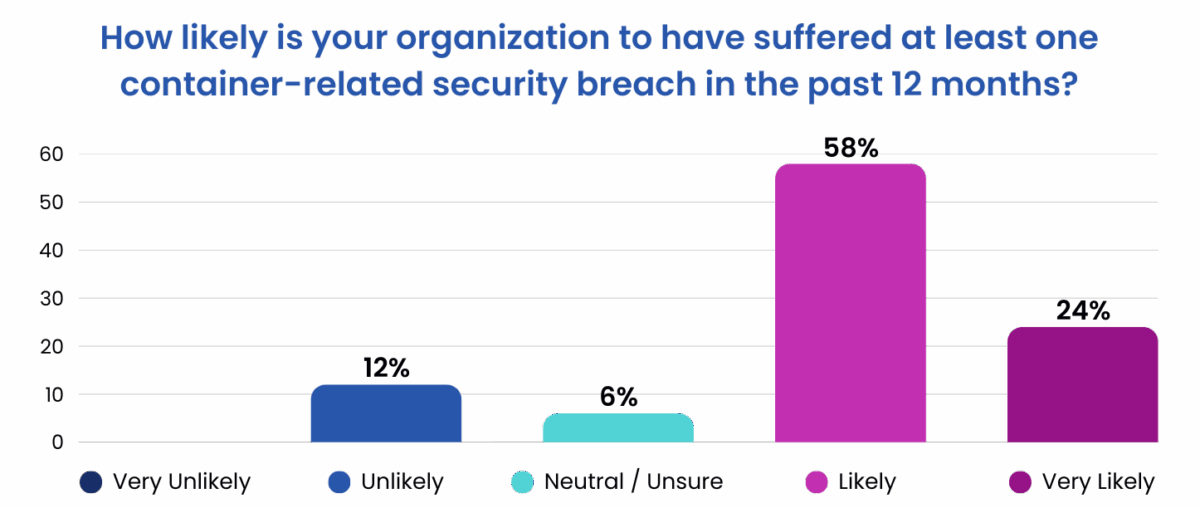
The most striking finding is the gap between strategic intent and operational execution. While 100% of DevSecOps leaders surveyed said containerization was critical to their production strategy, 82% admitted they had likely suffered at least one container-related security breach in the past 12 months. The data shows that organizations have the motivation to secure containers but lack the processes, tools, and automation to do so efficiently — particularly around CVE remediation at scale.
Why are organizations still getting breached despite prioritizing container security?
The report identifies two compounding problems. First, 91% of respondents cite limited visibility into container components as their biggest security blind spot — you cannot remediate what you cannot see. Second, there is a trust-versus-practice gap: 77% of teams trust curated catalogs over public registries, yet 90% still use lightly modified public images with little to no hardening. When platform teams attempt to manually maintain "golden images," the process becomes a bottleneck and developers bypass controls entirely, pulling directly from public registries and introducing unmonitored risk into production.
What role will AI play in container vulnerability management going forward?
The report shows strong consensus on AI-driven remediation: 100% of DevSecOps respondents said they are likely to use AI or automation to prioritize vulnerabilities, and 95% expect intelligent remediation to become standard practice. The appeal is concrete — rapid and targeted vulnerability response, operational consistency, improved accuracy, and significant reductions in both labor and business risk. The organizations moving fastest are pairing curated, pre-hardened container images with automated remediation pipelines that eliminate the manual curation bottleneck entirely.
What practical steps does the report recommend for closing the container security gap?
The report points to three shifts that leading teams are making. First, moving to curated container catalogs and hardened images that minimize attack surface by stripping unused components — shells, package managers, and non-essential libraries — rather than patching bloated public base images. Second, countering AI-accelerated threats with AI-driven defense, using automation to keep pace with the speed at which new vulnerabilities are disclosed and exploited. Third, offloading the undifferentiated engineering work of container maintenance and CVE remediation to a vendor operating under contractual SLAs, freeing engineering capacity for product work rather than patch management.
.png)
.png)